
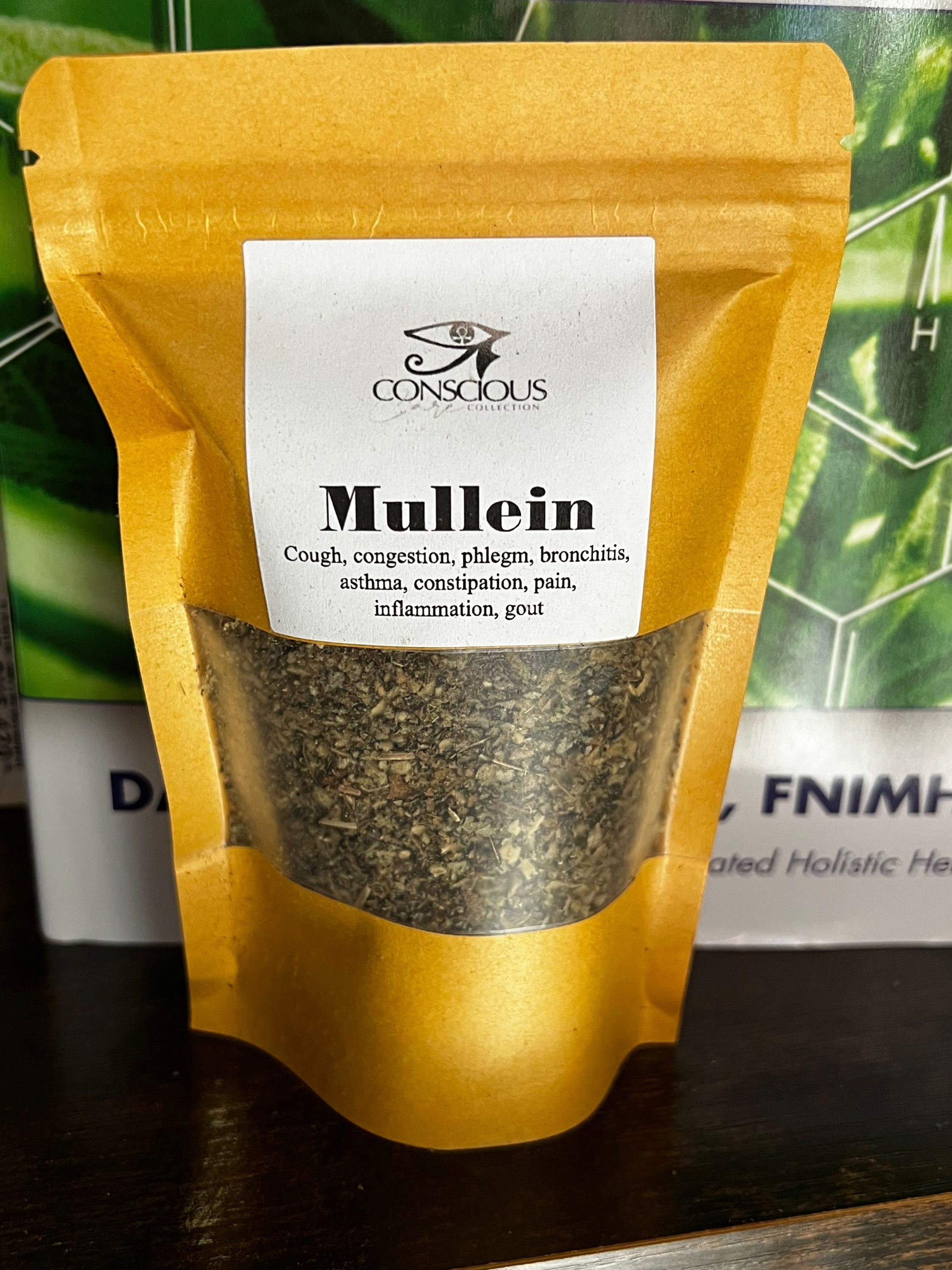

Mullein Tea
Mullein is an herb that has been used for centuries for various medicinal purposes. Here are some potential benefits of mullein, supported by cited sources:

1. Respiratory health: Mullein is commonly used to treat respiratory issues such as coughs, bronchitis, and asthma. It has expectorant properties, which help to loosen phlegm and mucus in the lungs.

Sources:
- Duke, J. A. (2002). Handbook of medicinal herbs. Boca Raton, FL: CRC Press.

- Grieve, M. (1971). A modern herbal. New York, NY: Dover Publications.

2. Anti-inflammatory properties: Mullein has anti-inflammatory properties, which can help to reduce inflammation in the body and alleviate symptoms of conditions such as arthritis.

Sources:
- Baser, K. H. C., & Demirci, B. (2007). Studies on the essential oils from the flowers of Turkish Verbascum species by GC-MS. Journal of Agricultural and Food Chemistry, 55(19), 7826-7830. doi: 10.1021/jf071125a

- Van Wyk, B. E., & Wink, M. (2018). Medicinal plants of the world: An illustrated scientific guide to important medicinal plants and their uses. Portland, OR: Timber Press.

3. Skin health: Mullein has been used topically to treat skin conditions such as eczema, psoriasis, and wounds. It has anti-inflammatory and antimicrobial properties, which can help to soothe and heal the skin.

Sources:
- Dornberger, K., & Wichtl, M. (1994). Verbascum thapsus L. and V. phlomoides L. (Königskerzen, Fackellilien). Zeitschrift für Phytotherapie, 15(2), 115-121.

- Grieve, M. (1971). A modern herbal. New York, NY: Dover Publications.

Overall, while mullein has a long history of use as a medicinal herb, more rigorous scientific research is needed to fully understand its potential benefits and appropriate uses. 1 oz serving. This statement has not been evaluated by the Food and Drug Administration. This product is not intended to diagnose, treat, cure, or prevent any disease.